Vietnam Tourist Places: The Ultimate Travel Guide
TRAVEL AND TOURISMIntroduction:
Why Visit Vietnam?
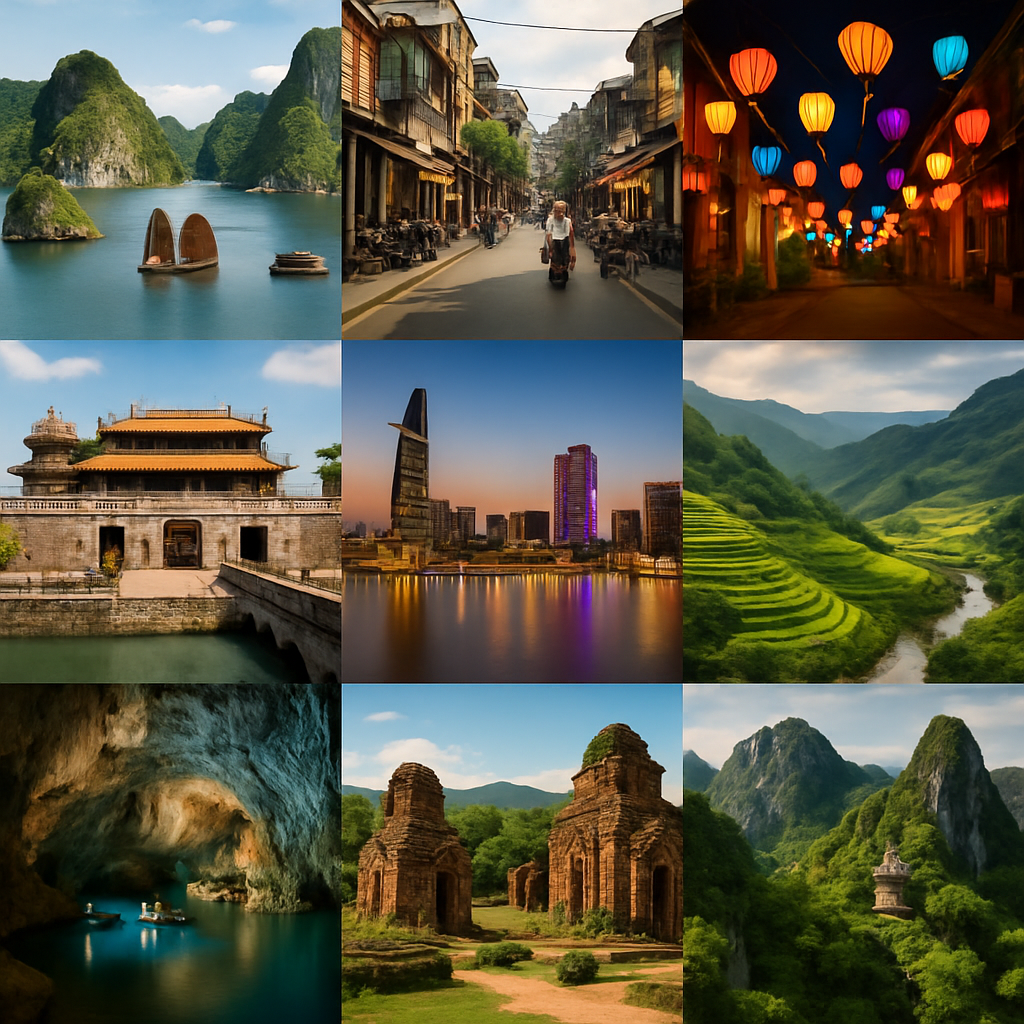
Vietnam is one of Southeast Asia’s most captivating destinations. From the misty mountains of the north to the bustling cities and tropical beaches in the south, the country offers travelers a perfect blend of natural beauty, ancient culture, delicious food, and warm hospitality.
It’s a place where UNESCO heritage sites sit beside vibrant street markets, where rice paddies stretch into the horizon, and where travelers can ride a motorbike through winding mountain passes or drift along peaceful rivers in wooden boats.
For tourists, Vietnam provides something for everyone: adventure, history, relaxation, culinary experiences, and spiritual discovery. This guide explores the best tourist places across Vietnam — divided into Northern, Central, and Southern regions — along with cultural highlights, practical tips, and itineraries.
🌄 Northern Vietnam: Culture, Nature, and Adventure
1. Hanoi – The Timeless Capital
Hanoi, Vietnam’s capital, is a city of contrasts. It balances ancient traditions and modern growth, offering travelers a rich cultural experience.
- Old Quarter: A maze of narrow streets filled with shops, food stalls, and colonial architecture. Each street traditionally sold one type of product (silk, jewelry, spices).n
- Hoan Kiem Lake: The heart of the city, perfect for morning walks. The Ngoc Son Temple on the lake adds charm.n
- French Quarter: Wide boulevards, colonial buildings, luxury hotels, and cafes.n
- Museums: Vietnam Museum of Ethnology, Ho Chi Minh Mausoleum, and Hoa Lo Prison provide historical depth.n
- Street Food: Don’t miss pho (noodle soup), bun cha (grilled pork with noodles), and egg coffee.n
Hanoi is also the main hub for trips to Halong Bay, Sapa, and Ninh Binh.
2. Ha Long Bay – A UNESCO Wonder
A jewel of Vietnam, Ha Long Bay is famed for its emerald waters and limestone karsts.
- Cruises: Multi-day cruises let travelers explore hidden caves, floating villages, and islands.n
- Kayaking & Swimming: Activities around secluded lagoons.n
- Cat Ba Island: The largest island, great for trekking in Cat Ba National Park.n
Ha Long Bay feels like stepping into a fairytale — it’s often the highlight of any Vietnam trip.
3. Sapa – Trekking Among Rice Terraces
Located in the mountains near the Chinese border, Sapa is known for its terraced rice fields and ethnic minority communities.
- Trekking: Multi-day treks through valleys and villages of the Hmong, Dao, and Tay people.n
- Fansipan Mountain: The highest peak in Indochina, accessible by cable car or trek.n
- Local Homestays: Staying with local families offers cultural immersion.n
Sapa combines stunning landscapes with cultural authenticity.
4. Ninh Binh – “Halong Bay on Landâ€
Ninh Binh is a peaceful province with limestone cliffs, rivers, and rice paddies.
- Trang An Scenic Complex (UNESCO site): Boat rides through caves and temples.n
- Tam Coc: Known for karst landscapes and rice fields.n
- Hoa Lu: Ancient capital with historic temples.n
- Mua Cave Viewpoint: Offers panoramic views of the countryside.n
Ninh Binh is perfect for travelers seeking natural beauty away from crowds.
5. Ha Giang – The Ultimate Road Trip
For adventurous travelers, Ha Giang Loop is considered Vietnam’s best motorbike route.
- Dong Van Karst Plateau: Dramatic mountains and ethnic villages.n
- Ma Pi Leng Pass: A breathtaking mountain road overlooking deep valleys.n
- Local Culture: Minority markets and homestays.n
This region is less touristy, offering raw beauty and adventure.
🯠Central Vietnam: Heritage and Coastal Beauty
6. Hue – The Imperial City
Hue was Vietnam’s capital during the Nguyen Dynasty. Today, it’s a UNESCO site filled with palaces, temples, and tombs.
- Imperial Citadel: A vast complex of palaces, gates, and gardens.n
- Royal Tombs: Each emperor built unique resting places along the Perfume River.n
- Perfume River Cruise: A peaceful way to explore the city.n
- Cuisine: Hue is famous for spicy and artistic dishes like bun bo Hue.n
Hue is a must for history lovers.
7. Da Nang – Beaches and Bridges
Da Nang is a modern coastal city with a relaxed vibe.
- My Khe Beach: Long, sandy, perfect for swimming.n
- Marble Mountains: Limestone hills with caves and temples.n
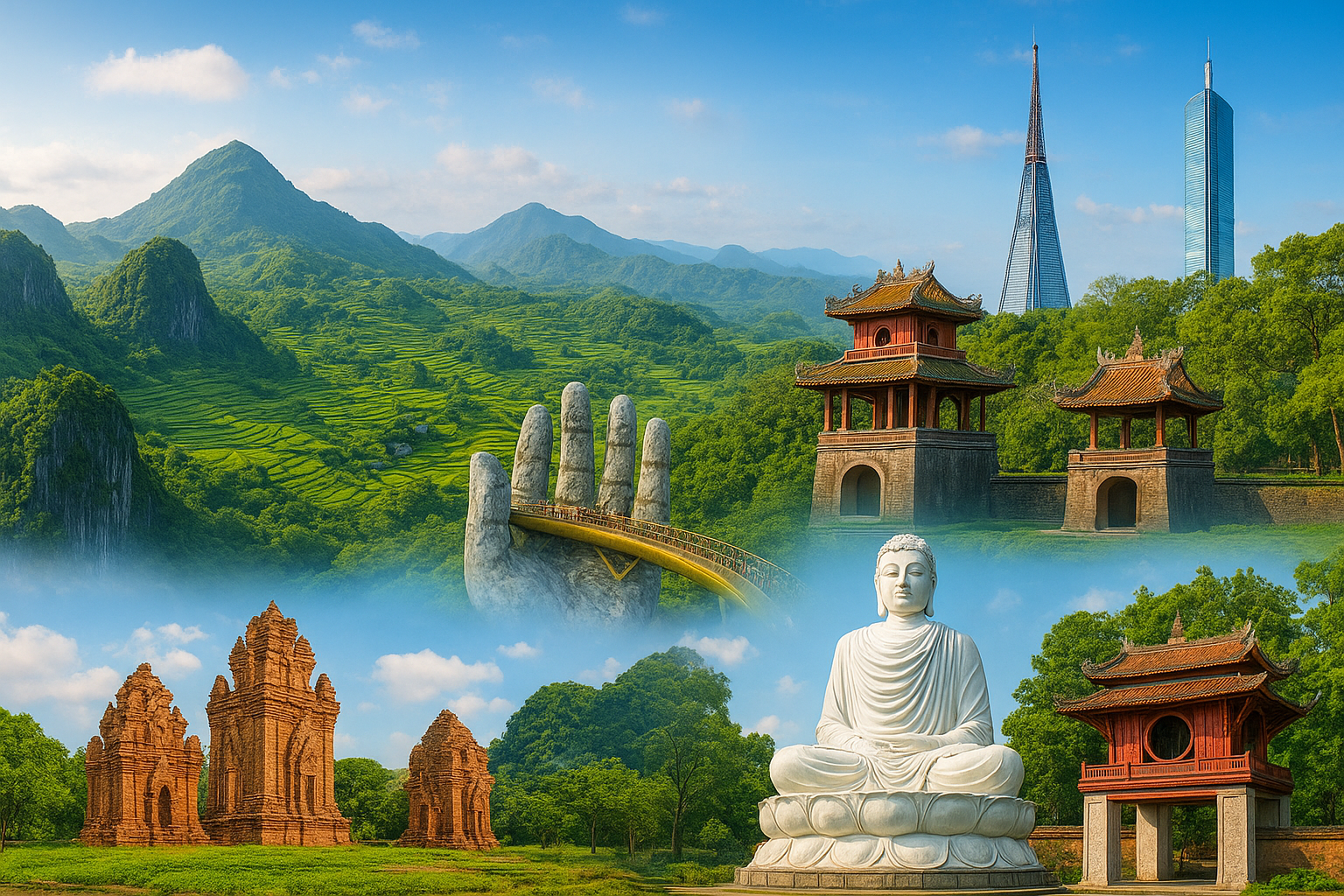
- Golden Bridge: A photogenic bridge held by giant stone hands in Ba Na Hills.n
- Dragon Bridge: A landmark that breathes fire on weekends.n
Da Nang also serves as a gateway to Hoi An and Hue.
8. Hoi An – A UNESCO Treasure
Hoi An is a beautifully preserved ancient town, famous for its lantern-lit streets and riverside charm.
- Old Town: Wooden merchant houses, Japanese Bridge, and colorful lanterns.n
- Tailoring: Hoi An is known for custom-made clothes.n
- Cooking Classes: Learn to make Vietnamese dishes.n
- Beaches: An Bang Beach is nearby.n
Hoi An offers culture, relaxation, and culinary delights.
9. Phong Nha-Ke Bang – Caves and Adventure
This national park is a UNESCO site with the world’s most spectacular caves.
- Son Doong Cave: The largest cave in the world.n
- Paradise Cave & Phong Nha Cave: Stunning formations accessible to tourists.n
- Adventure Tours: Jungle trekking and river activities.n
Phong Nha is perfect for adventurers and nature lovers.
10. Nha Trang & Quy Nhon – Beach Escapes
- Nha Trang: Popular for beaches, nightlife, and diving.n
- Quy Nhon: Quieter, with beautiful coastlines and seafood.n
Both cities offer great beach getaways in central Vietnam.
Southern Vietnam: Energy, Rivers, and Islands
11. Ho Chi Minh City (Saigon)
Vietnam’s largest city is vibrant and modern, yet rooted in history.
- War Remnants Museum: Insight into Vietnam War history.n
- Notre Dame Cathedral & Central Post Office: French colonial landmarks.n
- Ben Thanh Market: Souvenirs and street food.n
- Nightlife: Rooftop bars and street-side cafes.n
Saigon is the best starting point for trips to the Mekong Delta and southern islands.
12. Mekong Delta – The “Rice Bowl of Vietnamâ€
The Mekong Delta is a vast network of rivers, canals, and villages.
- Floating Markets (Cai Rang, Cai Be): Boats selling fruits, flowers, and local products.n
- Homestays: Experience rural life.n
- Fruit Orchards & Rice Fields: Lush countryside exploration.n
A boat trip here reveals the essence of Vietnam’s agrarian culture.
13. Phu Quoc Island – Tropical Paradise
Phu Quoc is Vietnam’s largest island, famous for beaches and luxury resorts.
- Long Beach: Great for swimming and sunsets.n
- Snorkeling & Diving: Coral reefs and marine life.n
- Phu Quoc National Park: Jungle treks and waterfalls.n
- Night Market: Fresh seafood and local specialties.n
Phu Quoc is ideal for beach lovers.
14. Con Dao Islands Secluded Beauty
Less touristy than Phu Quoc, the Con Dao Islands are known for pristine beaches and diving spots.
They also have a dark history — prisons from the French colonial era can be visited.
15. Mui Ne Sand Dunes and Water Sports
A beach town popular for windsurfing and kite surfing.
- Red and White Sand Dunes: Unique desert-like landscapes.n
- Fishing Villages: Local culture and fresh seafood.n
- Fairy Stream: A small canyon with red and white sand formations.n
Mui Ne combines relaxation with adventure.
Cultural Highlights of Vietnam
- Cuisine: Pho, banh mi, fresh spring rolls, seafood, and regional specialties.n
- Festivals: Tet (Lunar New Year), Mid-Autumn Festival, Hue Festival.n
- Handicrafts: Silk, ceramics, lanterns, conical hats.n
- Coffee Culture: Vietnam is famous for strong coffee, especially egg coffee and iced coffee with condensed milk.n
Practical Travel Tips
- Best Time to Visit:nNorth: Oct–Apr (cool, dry)nCentral: Feb–Aug (sunny)nSouth: Dec–Apr (dry season)nn
- North: Oct–Apr (cool, dry)n
- Central: Feb–Aug (sunny)n
- South: Dec–Apr (dry season)n
- Transport: Domestic flights, trains (Reunification Express), buses, and motorbikes.n
- Currency: Vietnamese Dong (VND).n
- Etiquette: Dress modestly in temples, remove shoes before entering homes, respect elders.n
- Connectivity: Affordable SIM cards widely available.n
Suggested Itineraries
- 7 Days: Hanoi → Halong Bay → Hoi Ann
- 14 Days: Hanoi → Sapa → Halong Bay → Hue → Hoi An → Ho Chi Minh City → Mekong Deltan
- 21 Days: Add Ha Giang, Phong Nha, Nha Trang, Phu Quocn
Conclusion
Vietnam is a destination that offers something for every kind of traveler. From the limestone cliffs of Ha Long Bay to the lantern-lit streets of Hoi An, from the bustling energy of Ho Chi Minh City to the peaceful waters of the Mekong Delta, the country is a land of contrasts and endless discovery.

Comments
No comments yet. Be the first to share your thoughts!