Ha Long Bay – A UNESCO Wonder
TRAVEL AND TOURISMIntroduction
Ha Long Bay, located in the northeastern part of Vietnam, is one of the most extraordinary natural landscapes in the world. Known for its emerald waters, dramatic limestone karsts, and rich cultural history, the bay has captivated travelers, poets, and historians for centuries. In 1994, Ha Long Bay was officially recognized as a UNESCO World Heritage Site for its exceptional scenic beauty, and in 2000, it gained further recognition for its outstanding geological and geomorphological value. Today, Ha Long Bay stands as both a symbol of Vietnam’s natural heritage and a vital hub for tourism, science, and culture.
This essay explores Ha Long Bay in depth—its geography, natural formation, biodiversity, myths and legends, cultural heritage, UNESCO recognition, tourism development, conservation challenges, and future outlook. Together, these dimensions reveal why Ha Long Bay deserves its place among the world’s greatest wonders.
Geographic Location and Physical Features
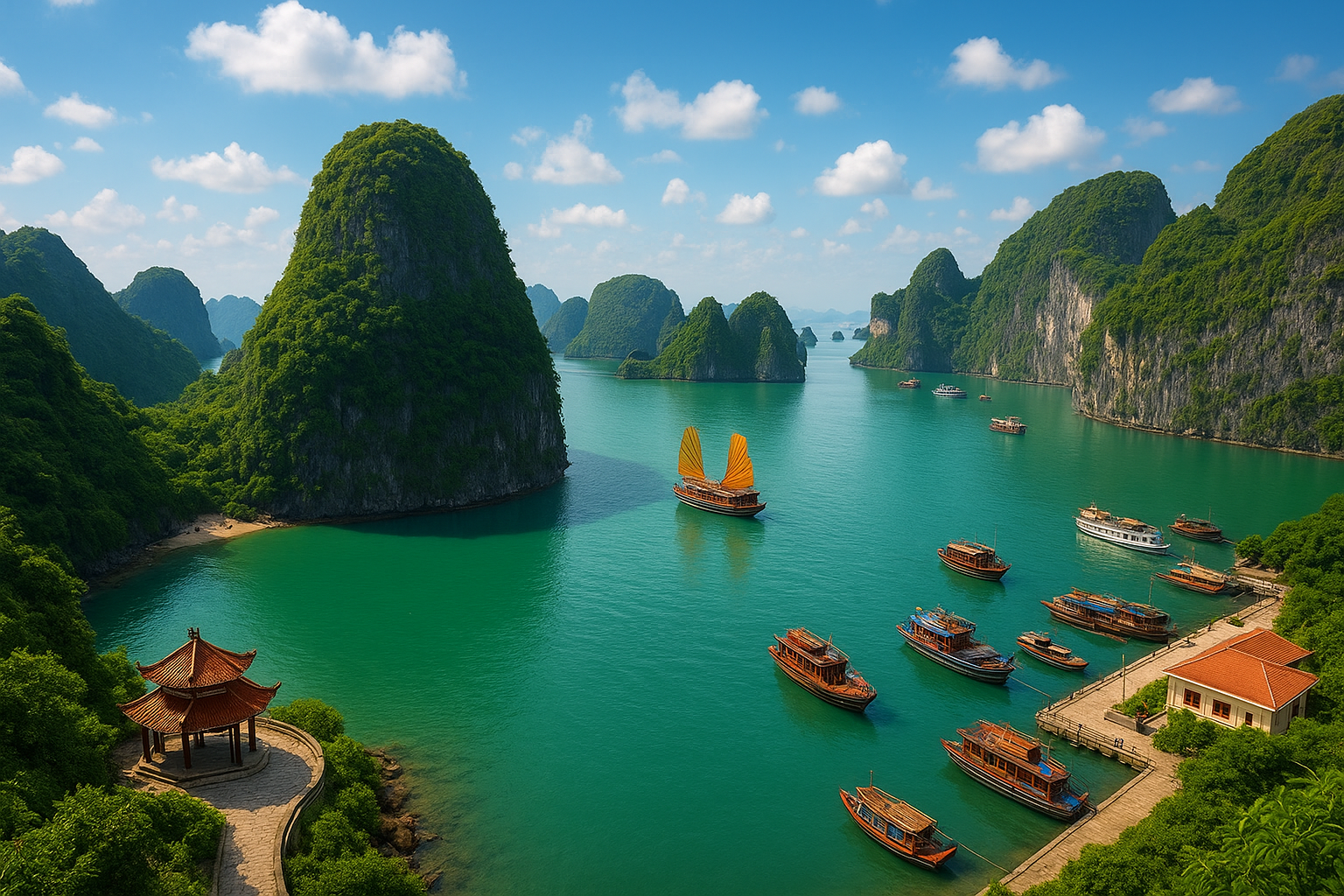
Ha Long Bay lies in Quang Ninh Province, along the Gulf of Tonkin, covering an area of approximately 1,553 square kilometers. The bay contains nearly 1,969 islands and islets, most of which are limestone formations shaped by millions of years of natural processes.
The limestone pillars, cliffs, and caves rise dramatically from the turquoise waters, creating a surreal seascape often compared to a dragon descending into the ocean—a fitting image, since “Ha Long” translates to “Descending Dragon.”
The bay’s physical features are divided into three main areas:
- Eastern Part (Bai Tu Long Bay) – Known for its quiet atmosphere and unspoiled beauty.n
- Central Part (Ha Long Bay proper) – The heart of tourism, featuring iconic islands such as Ti Top, Dau Go, and Bo Hon.n
- Western Part (Lan Ha Bay and Cat Ba Island area) – A blend of marine biodiversity, cultural villages, and growing eco-tourism.n
Each section has distinct ecological and geological features, but together they form a cohesive natural masterpiece.
Geological Formation
The formation of Ha Long Bay is the result of over 500 million years of geological evolution. The region has undergone various processes, including tectonic activity, sea-level changes, and tropical weathering, all of which shaped its karst landscape.
- Early Formation – Around 500 million years ago, the area was part of a shallow tropical sea where sedimentary rocks were deposited. Over time, tectonic activity uplifted the seabed.n
- Karst Evolution – Between 20 and 10 million years ago, rainfall and groundwater slowly dissolved the limestone, forming caves, sinkholes, and towers.n
- Sea Inundation – Rising sea levels submerged valleys, leaving only limestone peaks visible above water, creating the iconic island-studded seascape.n
This long-term natural process explains why Ha Long Bay is considered a textbook example of karst topography in a humid tropical environment. UNESCO recognized this unique geological history as a key reason for its world heritage status.
Biodiversity and Ecology
Ha Long Bay is not only visually stunning but also ecologically rich. The bay is home to a wide variety of ecosystems, including tropical evergreen forests, freshwater swamps, marine coastal ecosystems, and coral reefs.
- Flora: Over 500 species of plants thrive on the islands, including orchids, cycads, and mangroves. Many species have adapted to grow on thin layers of soil clinging to limestone rocks.n
- Fauna: The bay is home to more than 200 species of fish, 450 species of mollusks, and various rare animals such as the white-headed langur and the hawksbill turtle.n
- Marine Life: Coral reefs around the islands provide habitat for colorful marine organisms, including seahorses, squids, and numerous shellfish.n
The interconnected ecosystems make Ha Long Bay a vital ecological zone, contributing to regional biodiversity and supporting local livelihoods.
Myths and Legends
Like many natural wonders, Ha Long Bay is steeped in legend. The most famous myth explains the origin of its name:
According to Vietnamese folklore, when invaders threatened Vietnam, the Jade Emperor sent a family of dragons to help defend the land. These dragons spat out jewels and jade, which turned into islands and islets, forming a barrier against enemies. After the battle, the dragons chose to remain in the bay, blessing the land with protection and beauty. The name “Ha Long” (Descending Dragon) commemorates this mythical event.
Other local legends describe hidden treasures in caves, mysterious spirits, and love stories linked to specific islands. These tales add cultural depth to the bay, merging natural beauty with human imagination.
Cultural and Historical Significance
Beyond its natural wonders, Ha Long Bay has been home to human communities for thousands of years. Archaeological evidence reveals that prehistoric people lived in the area as early as 18,000 years ago.
- Soi Nhu Culture (18,000–7,000 years ago) – Stone tools and shells show early human settlement.n
- Cai Beo Culture (7,000–5,000 years ago) – Evidence of fishing and marine exploitation emerges.n
- Ha Long Culture (5,000–3,500 years ago) – Advanced pottery, tools, and trade suggest organized communities.n
Throughout history, Ha Long Bay has also served as a strategic location for defense and trade. During the Mongol invasions of Vietnam in the 13th century, the Vietnamese navy used the bay’s islands to ambush enemy fleets, securing victories that remain legendary in national history.
Today, Ha Long Bay is not just a natural wonder but also a cultural landscape shaped by centuries of human interaction. Floating fishing villages, with their unique traditions and lifestyles, continue to preserve maritime heritage in the modern era.
UNESCO Recognition
Ha Long Bay was inscribed as a UNESCO World Heritage Site in two stages:
- 1994 – Recognized for its exceptional natural beauty, featuring dramatic karst landscapes and seascapes.n
- 2000 – Recognized for its geological value, particularly as an outstanding example of karst formation and evolution in a humid tropical climate.n
This dual recognition makes Ha Long Bay unique, as few sites achieve UNESCO designation for both scenic beauty and geological significance.
UNESCO’s designation has elevated Ha Long Bay’s global profile, promoting tourism, conservation, and scientific research. However, it has also increased pressure to balance economic development with heritage protection.
Tourism in Ha Long Bay
Tourism is the lifeblood of Ha Long Bay’s economy. Every year, millions of visitors come to experience its natural and cultural attractions.
Attractions:
- Cruises: Luxury cruises and traditional wooden junks offer scenic tours of the bay.n
- Caves and Grottos: Sung Sot (Surprise Cave), Dau Go Cave, and Thien Cung (Heavenly Palace Cave) showcase stunning stalactites and stalagmites.n
- Beaches and Islands: Ti Top Island, Cat Ba Island, and Bai Chay Beach provide opportunities for swimming, kayaking, and hiking.n
- Cultural Experiences: Visits to fishing villages, seafood markets, and local festivals highlight community traditions.n
Tourism Benefits:
- Generates income for local communities.n
- Promotes cultural exchange.n
- Strengthens Vietnam’s international image.n
Tourism Challenges:
- Overcrowding and pollution from boats.n
- Damage to coral reefs and caves.n
- Strain on local infrastructure.n
Sustainable tourism management remains crucial to preserving Ha Long Bay for future generations.
Environmental and Conservation Challenges
Despite its protected status, Ha Long Bay faces significant threats:
- Pollution – Waste from tourism, fishing, and nearby industries affects water quality.n
- Overfishing – Declines in fish populations threaten marine biodiversity.n
- Climate Change – Rising sea levels and extreme weather events could damage ecosystems and cultural sites.n
- Urbanization – Rapid development in Quang Ninh Province increases pressure on natural resources.n
Efforts to address these challenges include stricter regulations on tourism activities, waste management programs, and community-based conservation initiatives. The government, NGOs, and UNESCO collaborate to monitor and protect the site.
Ha Long Bay in Literature, Art, and Media
For centuries, Ha Long Bay has inspired writers, poets, painters, and filmmakers. In Vietnamese literature, it is often described as a place of spiritual and poetic beauty. Traditional Vietnamese paintings depict the bay’s emerald waters dotted with dragon-like mountains.
Modern media has also embraced Ha Long Bay, with the site featured in international films, documentaries, and travel programs. It is frequently compared to other world-famous seascapes, such as Guilin in China and Phang Nga Bay in Thailand, though Ha Long Bay maintains a unique identity.
Future Prospects
The future of Ha Long Bay depends on balancing development with conservation. Some key strategies include:
- Eco-Tourism Development – Expanding green tourism options like kayaking, hiking, and community-based tours.n
- Education and Awareness – Promoting environmental stewardship among locals and tourists.n
- Scientific Research – Encouraging studies on marine ecosystems, geology, and sustainable development.n
- International Collaboration – Working with UNESCO and other global bodies to share best practices.n
If managed wisely, Ha Long Bay can remain a symbol of Vietnam’s heritage while contributing to global efforts in sustainable tourism and environmental conservation.
Conclusion
Ha Long Bay is more than a scenic wonder—it is a living museum of geology, ecology, history, and culture. Its towering limestone karsts, mystical caves, rich biodiversity, and enduring legends create a unique world heritage site recognized across the globe.
As both a UNESCO World Heritage Site and a national treasure of Vietnam, Ha Long Bay faces the dual challenge of preserving its fragile ecosystems while welcoming millions of visitors. The bay’s future depends on responsible stewardship, sustainable tourism, and continued appreciation of its natural and cultural wealth.
Ultimately, Ha Long Bay is not just a place—it is an experience, a story, and a reminder of humanity’s connection to the natural world. Its beauty is timeless, its heritage invaluable, and its significance global.

Comments
No comments yet. Be the first to share your thoughts!